Hear the context.
Practise questions that make space for faith, culture and family without assuming the answer.
Practical, scenario-based work for teams who need to ask better questions, respond to cultural and faith context without assumption, and explain what they did next.
The challenge
A person may describe distress through faith, avoid disclosing a concern in front of family, or hesitate to use a service that does not feel accessible. Staff need a way to explore what matters to this person, without treating a community as if everyone in it is the same.
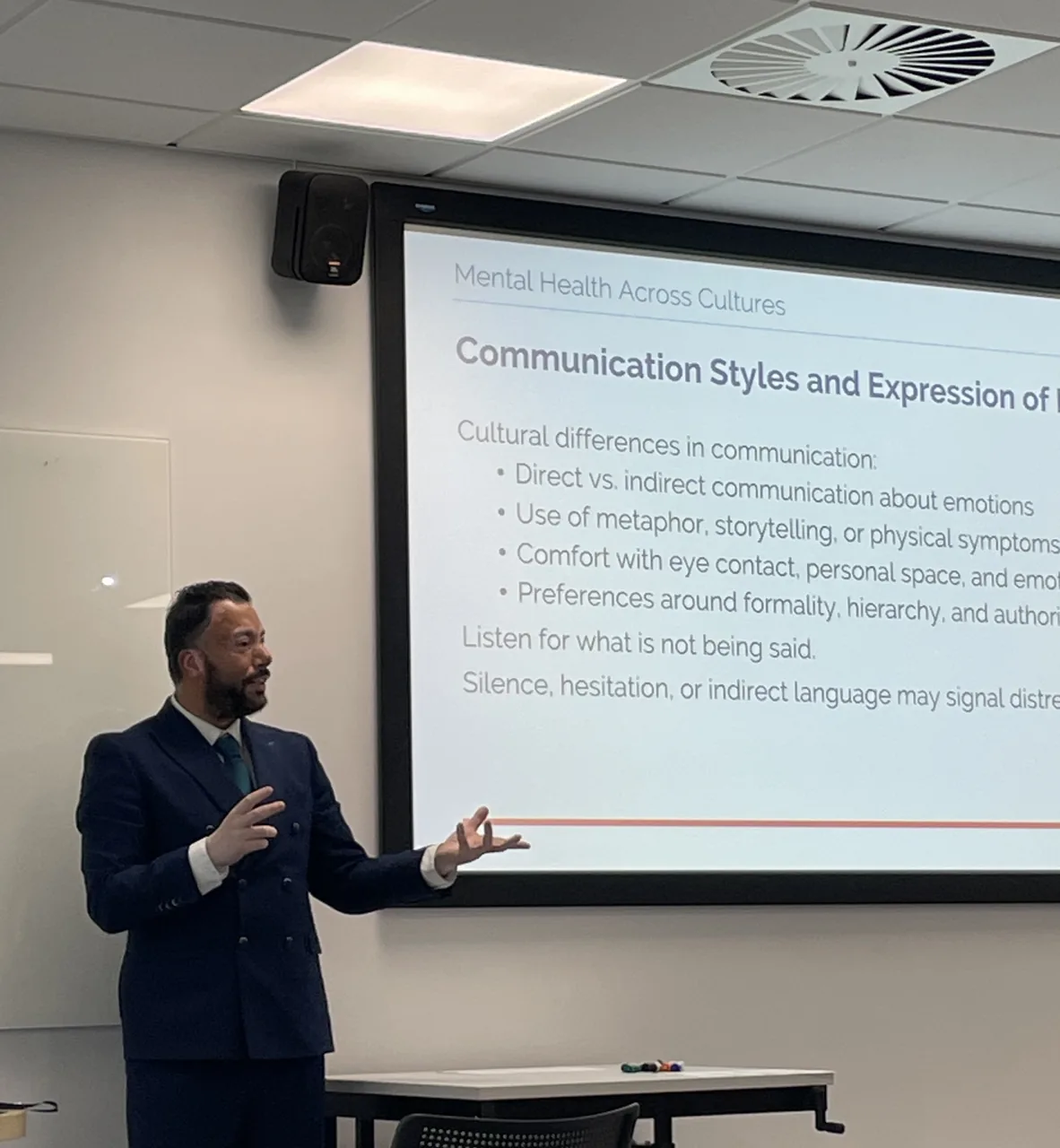
Practise questions that make space for faith, culture and family without assuming the answer.
Work through realistic situations from your setting, alongside clinical, safeguarding and organisational duties.
Use a repeatable method to show what was considered and why the team acted as it did.
The session can be scoped around the decisions your team actually makes.
We agree the scenarios and intended learning before delivery. The work is practical: how to notice, ask, decide and record.
In the room
Staff work through examples from their service and test questions and responses against the realities of their role.
After the session
A practical way to use the Cultural Interpreting Framework, with a summary of themes and agreed next steps for your leadership team.
We can agree how to assess learning and staff confidence before delivery. Any reported result depends on the responses actually collected; it is not a promised clinical or service outcome.
The method beneath the session
The Cultural Interpreting Framework gives teams five stages: Notice, Consider, Translate, Align and Record. It helps staff consider faith and culture alongside their existing duties, rather than as an afterthought.
When a workshop is only the start
Some service questions need direct insight from the people affected. We can separately scope a facilitated conversation with faith and community leaders, then help you record what the organisation heard and what it will do.
For ongoing decisions, a Community Intelligence Retainer can provide standing advice after the initial work.
Raza spent seven years at an NHS mental health trust as a mental health chaplain, clinical staff governor and co-chair of the race equality staff network. CultivIQ has delivered related CPD in healthcare and student mental health settings.
No. We agree the audience and the situations your team faces before delivery. A focused session can be tailored to one service or repeated across sites with examples matched to each setting.
No. Clinicians and safeguarding leads retain their professional responsibilities. CultivIQ helps staff understand cultural and faith context, ask better questions and record the reasoning around their decisions.
Where it would help answer a specific service question, we can scope a separate, facilitated dialogue with faith and community leaders. The people involved and the purpose are agreed with you first.
Tell us where your team needs to start.
A first conversation will establish the audience, the decisions in scope and whether a focused session or wider programme fits.